


Choosing the Right Interior Doors for Modern Homes: A Step-by-Step Guide
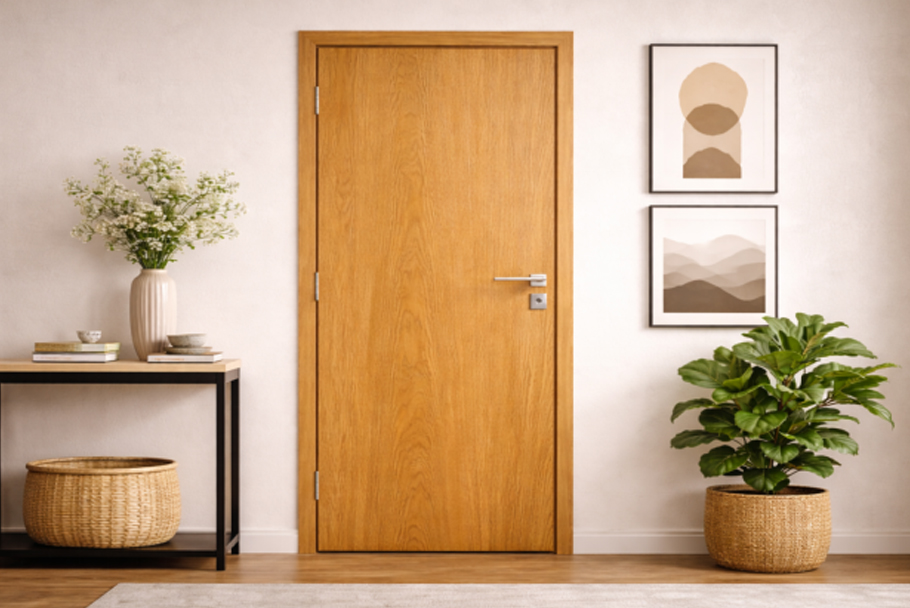
Interior doors play a quiet yet defining role in modern homes. Beyond separating rooms, they influence privacy, acoustics, and the overall visual rhythm of a space. The right door can make a home feel cohesive and thoughtfully designed, while the wrong choice can disrupt both function and aesthetics. With evolving interior styles, compact urban layouts, and a growing focus on practical design, choosing interior doors today involves more than just picking a finish. From materials and construction to proportions and placement, every detail matters. This guide takes a clear, step-by-step approach to choosing interior doors. Instead of starting with styles or finishes, it begins with how doors are actually used in everyday life. By understanding function first, design decisions become simpler and better suited to long-term living.
Step 1: Start with How You Use Each Room
Before exploring interior door designs or materials, it helps to pause and consider function. Not every room in a home places the same demands on a door, and recognising these differences early prevents compromises later.
In bedrooms, privacy and sound control matter most. Doors here should feel solid, close smoothly, and contribute to a calm, enclosed environment that supports rest.
For bathrooms, moisture resistance and surface durability become essential. Doors must handle humidity and frequent use without swelling, warping, or requiring constant maintenance.
Kitchens and utility areas place emphasis on durability. Doors in these spaces are opened and closed often, sometimes with wet or busy hands, so strength, stability, and ease of cleaning are key considerations.
In studies, children’s rooms, or multi-purpose spaces, acoustic comfort and long-term wear matter more than visual statement alone. A well-built door helps manage noise while standing up to daily use over time.
Starting with usage helps narrow down the right construction and performance requirements. Once function is clearly defined for each space, choosing the appropriate door type, finish, and frame becomes far more intuitive, and far better aligned with the demands of modern living.
Read Also: Inside the Door: Why Core Construction Matters in Interior Door Design
Step 2: Choose the Right Door Construction
Once you are clear about how each room functions, the next step is understanding how the door is constructed. This is where long-term performance is decided. While surface design is what people usually see, construction is what determines stability, sound control, durability, and how the door behaves over years of daily use.
Flush Doors
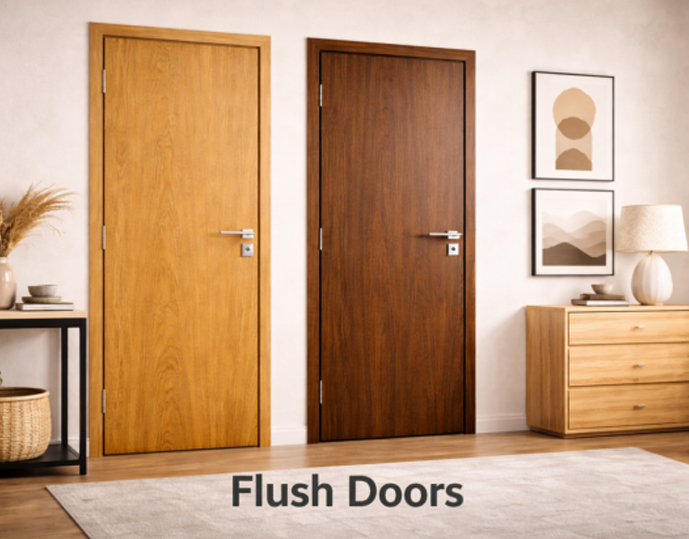
Flush doors feature a flat, seamless surface with minimal detailing. They are widely used in modern homes because they sit quietly within the space, allowing walls, furniture, and finishes to take centre stage. Their clean profile makes them versatile across bedrooms, studies, and passageways, especially in contemporary interiors that favour simplicity and visual continuity.
Panelled Doors
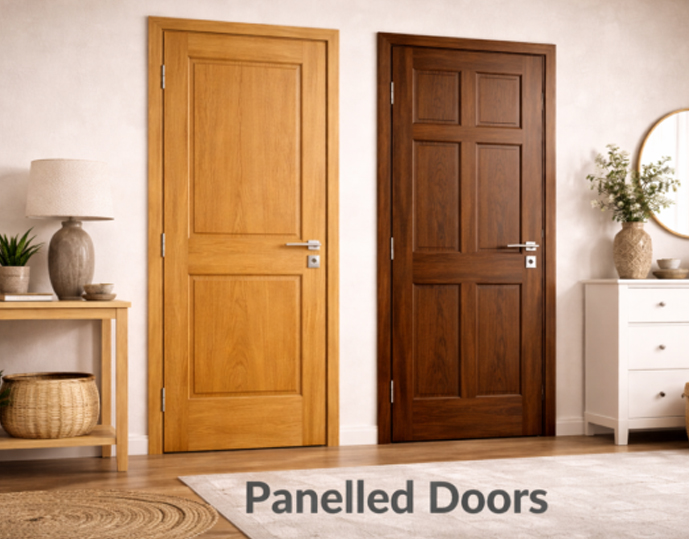
Panelled doors introduce depth and character through raised or recessed sections. They work well in homes that lean towards classic, transitional, or warm contemporary styles. Beyond aesthetics, panelled construction can also add a sense of solidity, making these doors suitable for bedrooms and main internal passages.
Sliding Interior Doors
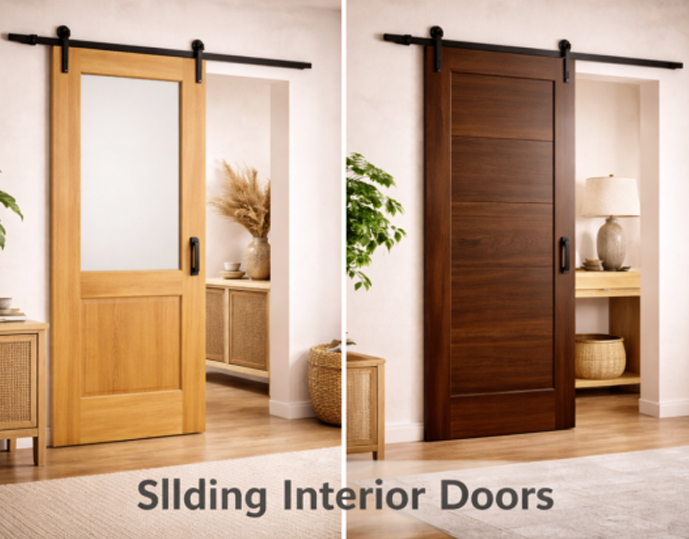
Sliding doors are chosen primarily for spatial efficiency. In rooms where swing space is limited, such as compact bedrooms, wardrobes, or study corners, sliding systems allow better movement without compromising access. When designed well, they integrate seamlessly into modern interiors while serving a clear functional purpose.
Understanding the Core: Solid vs Engineered
This is one of the most important yet least understood aspects of interior doors. Solid wood doors offer a traditional feel but can be more sensitive to temperature and humidity changes. Engineered doors, on the other hand, are designed to improve stability and consistency by combining layered construction with controlled materials.
For modern homes, especially in varying climatic conditions, engineered door cores often deliver better alignment, reduced warping, and smoother performance over time. This makes them a practical choice for homeowners who value reliability alongside design.
By choosing the right construction early, you set the foundation for doors that not only look right on day one, but continue to function smoothly for years to come.
Read Also: Solid vs. Engineered vs. Hollow Core Wooden Doors: Know the Difference
Step 3: Pick an Interior Door Design That Matches Your Home Aesthetic
With function and construction in place, the next step is design. This is where interior doors begin to shape the personality of your home. In modern interiors, door design is less about decoration and more about how quietly, or confidently, it sits within the overall space.Here’s how to choose an interior door design that aligns with your home’s aesthetic.
Minimal & Contemporary Homes
For minimalist and contemporary interiors, flat or flush door designs work best. Their clean surfaces allow visual continuity across walls and passages, helping spaces feel uncluttered and calm. Subtle details such as fine grooves, shadow gaps, or refined handle profiles can introduce interesting elements without disrupting simplicity.
Warm Contemporary Interiors
In warm contemporary homes, natural wood tones and refined textures add depth without heaviness. Veneer-finished doors with understated grain patterns pair well with wooden flooring, soft furnishings, and neutral colour palettes, creating interiors that feel cohesive and comfortably lived-in.
Classic or Transitional Spaces
Homes with classic or transitional styling often benefit from panelled door designs. These doors introduce structure and rhythm while remaining timeless. When proportions are well-balanced and finishes are restrained, panelled doors feel elegant rather than ornate, fitting seamlessly into modern layouts inspired by traditional design language.
Statement Door Designs
For homeowners seeking a focal point, statement door designs offer an opportunity to introduce character without relying on excessive décor. Textured surfaces, geometric patterns, and fluted detailing bring depth and visual rhythm to interiors, making the door itself part of the design narrative rather than a background element.
Thinking Beyond Individual Rooms
When selecting interior door designs, it helps to look at the home as a connected set of spaces rather than a series of individual rooms. Doors appear repeatedly across passages, bedrooms, and shared areas, and when their design language is consistent, the home feels more resolved and intentional. A cohesive approach to finishes, detailing, and proportions allows doors to support the overall aesthetic quietly, without drawing unnecessary attention or disrupting the flow of the interior.
Read Also: Interior Door Design Inspirations: From Teak to Laminates
Step 4: Understand Types of Wooden Doors (Without the Confusion)
The term “wooden door” is often used broadly, but in practice, it can refer to different constructions and finishes. Understanding these distinctions helps you choose a door that not only looks right, but also performs reliably over time, especially in modern homes where consistency and durability matter. Types of wooden doors include:
Solid Wood Doors
Solid wood doors are made from natural timber and are often associated with a traditional, premium feel. While they offer visual richness, they can be more sensitive to changes in temperature and humidity. In homes where climate control varies, solid wood doors may require closer maintenance to retain alignment and finish.
Engineered Wooden Doors
Engineered wooden doors are designed to improve upon the limitations of solid wood. By using layered construction and controlled materials, engineered doors provide greater dimensional stability and uniform performance. For modern homes, this often translates to doors that remain aligned, resist warping, and operate smoothly across seasons.
Veneer-finished Doors
Veneer-finished doors combine the natural beauty of real wood with the strength of an engineered core. This allows homeowners to enjoy authentic wood grain and warmth, while benefiting from improved stability and long-term consistency. Veneer doors work well in bedrooms, studies, and living spaces where aesthetics and performance are equally important.
Laminate-finished Doors
Laminate-finished doors focus on durability and ease of maintenance. They offer a wide range of colours, textures, and contemporary finishes, making them suitable for high-use areas or homes that prioritise practicality alongside design. Their resistance to wear and ease of cleaning make them a reliable choice for everyday living.
By understanding these types clearly, the decision becomes less about labels and more about suitability. The right wooden door is one that balances appearance, performance, and longevity, supporting the way your home is lived in, day after day.
Step 5: Don’t Ignore the Frame – Door Frame Types That Matter
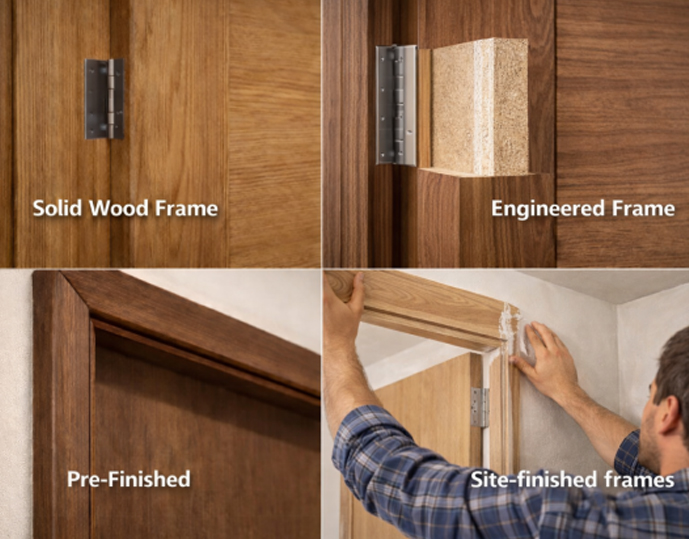
While doors often receive most of the attention, the frame plays an equally critical role in how an interior door performs. A well-designed door frame ensures correct alignment, smooth operation, and long-term stability. Even the best door can underperform if the frame is weak, poorly finished, or incorrectly installed. Different types of door frames available on the market include:
Solid Wood Frames
Solid wood frames are a traditional choice and can offer strength when crafted and installed well. However, their performance depends heavily on wood quality, seasoning, and site conditions. In environments with fluctuating humidity, they may be more prone to movement over time.
Engineered Door Frames
Engineered door frames are designed to address these challenges. Built using controlled construction methods, they offer improved dimensional stability and consistent alignment. For modern homes, engineered frames help maintain the door’s fit, reduce sticking or sagging, and support smoother opening and closing over the years.
Pre-Finished Frames
Another important consideration is the finish. Pre-finished frames arrive ready to install, with uniform colour, texture, and surface protection. They reduce on-site work, shorten installation time, and deliver a cleaner, more precise finish.
Site-Finished Frames
Site-finished frames offer greater flexibility when a specific colour or finish is required to match the interior scheme. However, because finishing is carried out on-site, the final outcome depends largely on workmanship and site conditions. Variations in application, drying time, and surface preparation can affect consistency, making quality less predictable compared to factory-finished alternatives.
Choosing the right frame is not just a technical decision, it directly affects how refined the door feels in daily use. A stable, well-finished frame protects your investment, ensuring that doors continue to look aligned and operate effortlessly as the home settles and ages.
Read Also: All You Need to Know about Door Frame Types
Step 6: Check the Practical Details Most People Miss
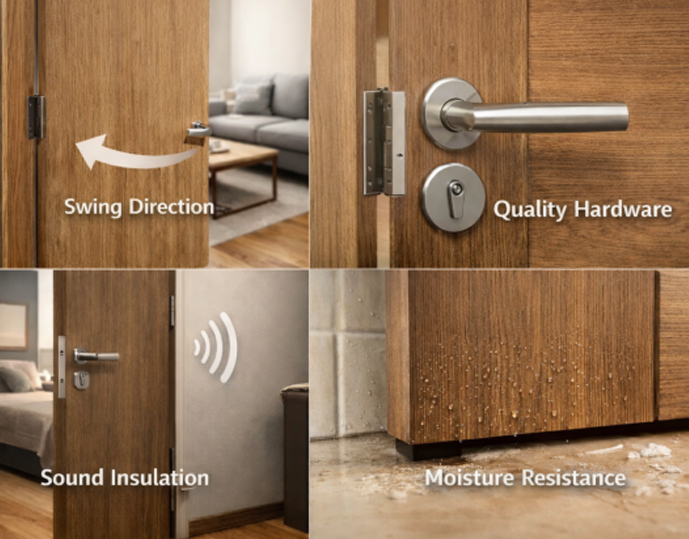
After design, construction, and frames are decided, there are a few practical details that are often overlooked, but are essential to everyday door performance. Getting these right ensures comfort, ease of use, and fewer adjustments later. Things to consider include:
Door Swing and Clearance
The direction in which a door opens affects circulation, furniture placement, and overall safety. Planning door swing early helps avoid awkward clearances, blocked pathways, or doors that interfere with daily movement once the space is furnished.
Hardware Quality
Hinges, locks, and handles influence more than just security. Quality hardware supports the door’s weight evenly, allows smoother operation over time, reduces noise during use, and contributes to a refined, well-finished feel in everyday handling.
Sound Insulation
Sound control is often noticed only after moving in. Bedrooms, studies, and media rooms benefit from doors with solid construction and precise fitting, helping reduce sound transfer and maintain privacy between spaces.
Moisture Resistance and Ventilation
In areas exposed to humidity, such as bathrooms and kitchens, moisture resistance becomes essential. Doors and frames suited to these conditions are less likely to swell, stick, or require frequent maintenance, ensuring consistent performance over time.
Why These Details Matter
Individually, these considerations may seem minor. Together, they shape the everyday experience of living with interior doors. Paying attention to them early helps ensure doors remain comfortable, reliable, and easy to live with, long after the installation is complete.
Step 7: Budget Smart: Where to Spend and Where to Save
Interior doors are a long-term part of the home, not a short-term upgrade. Approaching the budget thoughtfully helps balance design expectations with performance, ensuring you invest where it matters most and optimise where flexibility allows.
For primary spaces such as bedrooms, studies, and main internal passages, it is worth prioritising quality. Doors in these areas are used daily and benefit from better construction, stable cores, and refined finishes that hold up over time. Investing here improves comfort, sound control, and overall longevity.
In secondary areas, such as storage rooms or lesser-used spaces, simpler constructions and finishes can work well without compromising functionality. These choices help manage overall costs while maintaining visual consistency across the home.
Several factors influence the cost of interior doors. Construction type plays a major role, with engineered doors often offering better value over time due to their stability and reduced maintenance needs. Finishes, such as veneers, laminates, or textured surfaces, also affect pricing, as do frame quality, hardware selection, and installation precision.
Rather than focusing only on upfront cost, it helps to view doors through a value lens. A well-made door with consistent performance, minimal maintenance, and lasting aesthetics often proves more economical over its lifespan than a lower-cost alternative that requires frequent adjustments or replacement.
Why Mikasa Doors Fit Modern Homes
By the time you reach this stage, one thing becomes clear: choosing interior doors is not about a single decision, but about how multiple elements come together, such as usage, construction, design, materials, frames, and long-term performance. This is where engineered door systems make a meaningful difference.
Mikasa doors are designed with modern homes in mind. Their engineered construction focuses on stability and consistency, helping doors remain aligned and smooth to operate across changing seasons and everyday use. This makes them particularly suited to Indian living conditions, where temperature and humidity variations are a reality.
Beyond performance, Mikasa offers a refined range of finishes, including premium veneers and laminates, allowing doors to integrate seamlessly with contemporary interiors. Factory-finished surfaces ensure uniform quality and reduce on-site finishing work, resulting in a cleaner, more precise outcome.
Mikasa’s approach extends to door frames as well. Precision-engineered frames and pre-hung door solutions help ensure correct alignment, faster installation, and long-term reliability. The result is a door system that feels considered, well-fitted, and effortless in daily use—qualities that matter in homes designed for long-term living.
Explore Interior Door Solutions Designed for Modern Living
If you are planning a new home or upgrading your interiors, choosing the right interior doors is a decision that deserves careful thought. Explore the range of engineered interior doors and frames from Mikasa to find solutions that combine thoughtful design, dependable performance, and a refined finish, created to complement modern homes and the way they are lived in.
About Mikasa Doors
Mikasa Doors, a brand by Greenlam Industries, offers premium, factory-finished engineered wooden doors and frames for residential and commercial spaces, known for their ready-to-install convenience, unified design (matching leaf and frame), and certified performance, including specialized fire-rated and high-radiation shielding options, focusing on durability, aesthetics with veneers/laminates, and seamless integration for modern buildings.
Frequently Asked Questions

Interior Doors as Design Statements: Bold Choices for Modern Homes
Interior doors have evolved beyond plain and utilitarian designs. Today, these often-overlooked elem

The Impact of Door Hardware on Interior Design: Handles, Hinges, and More
When choosing interior doors, it’s easy to overlook the importance of hardware. However, handles,

5 Reasons to Invest in Mikasa Doors
Doors are an integral component of any interior. Interior doors provide privacy and security, help i
 Email:
  Toll Free No.: