


5 Main Door Inspirations to Transform Your Home Entrance
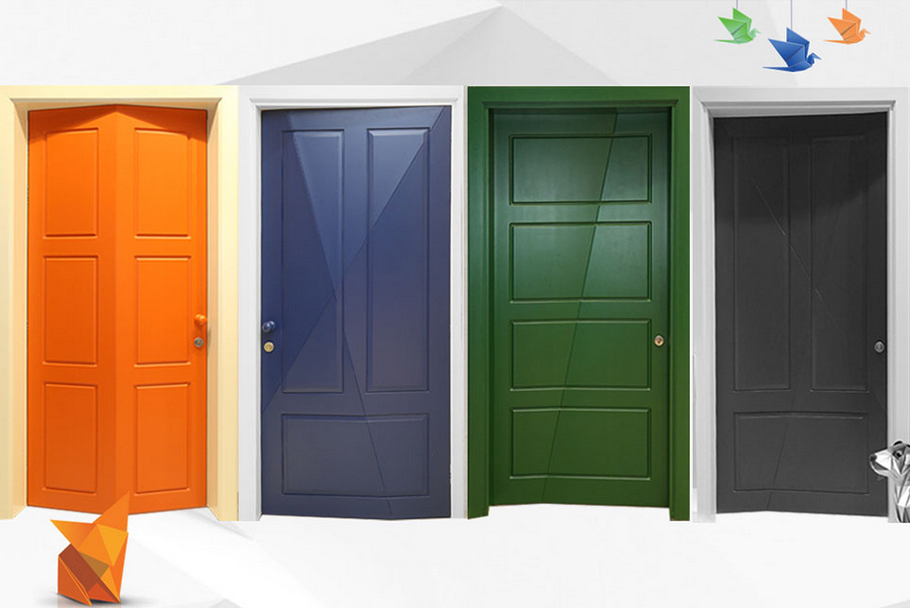
A home’s entrance sets the tone for what lies beyond, playing a central role in shaping that first impression. While many homes still rely on standard or purely functional doors, a contemporary selection can significantly elevate how the home is perceived by visitors as well as inhabitants. Today, doors go beyond basic form and finish, bringing together material, structure, and detailing, to create entrances that feel well-resolved and cohesive. In this article, we’ll explore how different approaches to door design can transform your home’s entrance, and offer ideas that balance aesthetics with practical applications.
1. Minimal Flush Main Doors with Seamless Surfaces
Minimal flush doors focus on clean geometry and uninterrupted surfaces, making them a strong choice for contemporary homes. In this approach, the main door design is treated as an extension of the wall rather than a separate element, allowing the entrance to feel more cohesive and visually calm.
Mikasa Doors’ Dura Collection is designed for exactly this direction. Each door set is factory-finished with a smooth laminate surface, a matching frame, and matching edge banding on all four sides, resulting in a complete, coordinated system. There is no on-site finishing and no mismatch between the door and frame, ensuring a clean, precise outcome from installation. With a wide range of finishes, the surface can be aligned with surrounding walls to create a seamless front door design for house.
To work with this approach effectively:
- Go full-height where possible: Extending the door closer to the ceiling reduces visual breaks and enhances height.
- Blend with surrounding finishes: Matching tones help achieve a more seamless house door design.
- Keep hardware minimal: Slim handles or recessed pulls maintain the clean surface.
- Focus on alignment: Positioning the door in line with wall panels and ceiling edges improves visual structure.
The Dura Collection also carries a 5-year warranty against manufacturing defects and is built with a moisture-resistant, termite-resistant core, ensuring that a minimal main door design performs reliably over time.
Read Also: Top Wooden Door Designs for Creating a Warm, Welcoming Home
2. Wood-Finish Main Doors with Natural Grain Expression
A wooden main door design brings natural warmth and character to an entrance, making it feel inviting from the very first glance. Here, the material takes centre stage, where grain, tone, and finish come together to shape a refined main door design for the house.
At Mikasa Doors, wood-finish doors are developed with a clear focus on material authenticity. We work with surface options such as veneers, laminates, and paint, but for entrances where the grain needs to remain expressive, our Mikasa Decowood Veneers offer a wide and versatile range. With a large selection of wood species, the finish can be aligned closely with the tone, depth, and character of the entrance.
To shape this approach effectively:
- Let the grain lead the design: The surface should feel complete on its own. For instance, a species like American Walnut carries enough depth and variation that it does not need additional detailing.
- Work with grain direction: Grain placement can influence how the door is perceived. For instance, vertical grain in White Oak makes the entrance feel taller, while horizontal grain in Ash creates a wider, more relaxed look.
- Choose tone based on the setting: The overall tone should respond to the space. For instance, deeper finishes like Teak or American Walnut add presence, while lighter options such as White Oak keep the entrance feeling more open.
- Keep the composition aligned: The door and frame should read as one unit. For instance, using a matching veneer finish across both helps avoid visual breaks.
- Refine the finish thoughtfully: The finish controls how the grain is experienced. For instance, a matte surface keeps the look soft, while a slightly polished finish enhances depth through light.
This approach keeps the focus on material expression, resulting in a front door design for a house that feels warm, composed, and visually complete.
Read Also: 3 Trending Home Door Design Ideas for a Stylish Welcome
3. Panelled Main Doors with Structured Detailing
Panelled doors introduce a sense of structure to the entrance, where the surface is organised through lines and divisions instead of remaining plain. In this type of main door design for homes, the detailing does not rely on heavy ornamentation; instead, proportion, spacing, and surface rhythm shape how the door is read.
Our Grooved Collection brings this idea into a more refined, contemporary format. With 7 textures and 37 wood finishes, it allows panel-like definition to emerge through controlled linear detailing, where grooves and grain work together to create depth without disrupting the overall surface.
Each texture builds structure in a slightly different way:
- Linear introduces clean, directional lines that keep the surface organised and minimal
- Ribbed creates a tighter rhythm, adding subtle shadow and depth across the panel
- Thread brings finer detailing, giving the surface a softer, more understated structure
- Flutes offer a deeper profile, helping the door feel more defined and prominent
- Diagonal shifts the visual flow, adding movement while still maintaining control
- Drift feels more relaxed, softening the overall composition
- Matrix introduces a more geometric pattern, creating a clearly structured surface
The result is a main door design where the surface feels composed and intentional, with just enough detailing to define the entrance while maintaining a clean and balanced appearance.
4. Main Doors with Integrated Metal or Linear Accents
Metal or linear accents bring a sharper, more defined character to a front door design, especially in homes where the entrance needs to feel contemporary without becoming overly detailed. These elements introduce contrast, but when handled well, they still sit comfortably within the overall composition.
This direction comes through most clearly when metal or linear accents are treated as part of the overall design, not an add-on. Our Bespoke Collection allows this level of control, where the door is developed around your design intent. Material, surface finish, groove pattern, and even structural elements are resolved together, so accents like metal inlays, etched lines, or linear grooves feel fully integrated into the door rather than applied on top.
Read Also: Your Concise Guide to Designing Impressive Front Doors for Homes
To shape this direction more clearly:
- Keep the detailing controlled: A single inlay or a few linear accents are often enough to define the surface without making it feel busy.
- Use lines to influence proportion: Vertical accents can make the door feel taller and more formal, while horizontal lines introduce a sense of width and visual ease.
- Let materials work together: Wood, metal, and surface treatments should feel connected rather than contrasting for the sake of it.
- Maintain finish consistency: Hardware and surface accents should follow the same finish language so the door feels resolved as one piece.
- Treat the door as a complete system: When the frame, surface, and detailing are aligned, the entrance reads as a single composition rather than separate elements.
This approach to main door design allows for a more personalised outcome, where the entrance reflects a clear design intent and every detail feels considered.
5. Statement Main Doors with Sculpted Surface Design
Some entrances are meant to do more than welcome you in. They are designed to leave a lasting visual impression from the very first glance. In such cases, the main door design for house moves beyond flat surfaces and into sculpted forms, where geometry, depth, and surface treatment define the experience. Using finishes such as solid colour laminates allows these forms to stand out clearly, keeping the focus on shape and structure rather than material variation.
Our Origami Collection, developed in collaboration with RKDS, explores this idea through fold-based design, where the surface itself becomes the defining feature of the door.
Each design offers a distinct expression:
- Flexa: Inspired by Kirigami, Flexa introduces carved relief across the surface, creating a three-dimensional effect where light and shadow shift through the day, adding depth without additional detailing.
- Origamo: Designed with a half-open fold orientation and concealed hinges, Origamo creates a sense of lightness, where the door appears almost suspended, with clean lines and uninterrupted geometry.
- Papyrus: Papyrus brings in a diagonal fold pattern influenced by Japanese craft, introducing movement across the surface while maintaining a controlled, minimal look.
- Tangram: Built around the geometry of traditional kimono folds, Tangram creates a bold, structured composition, where the pattern itself becomes the visual anchor of the entrance.
These designs work best when given enough surface area to unfold, allowing the geometry to read clearly. The result is a front door design for a house that feels expressive, architectural, and distinctly intentional.
About Mikasa Doors
At Mikasa Doors, we offer complete door systems designed to bring together precision, performance and refined aesthetics. Our solutions go beyond standalone shutters, combining door, frame and compatible hardware into engineered systems that ensure consistent quality and reliable installation. Each door is factory-finished under controlled manufacturing processes, delivering uniform surface finish, durability and long-term performance. Our portfolio spans residential and commercial applications, including performance-driven solutions such as fire-rated and specialised doors designed to meet functional and safety requirements.
Our range includes a variety of finishes and configurations suited to different main door designs for home, from clean, minimal surfaces to more structured layouts. With a focus on both design and long-term performance, Mikasa Doors supports entrances that are not only visually well-resolved but also built to perform reliably in everyday use. To explore suitable options for your space or discuss your requirements, you can call 1800 833 0004, write to info@mikasadoors.com, or fill out our contact form.
Frequently Asked Questions

Sustainable Home Design: Transforming Spaces with Eco-Friendly Doors
Your home’s design reflects your style and values. Today, as sustainability becomes increasingly i

Tips to Protect Your Engineered Wooden Doors From Sun Damage
Your front door is the first thing that captures visitors’ attention, so naturally, you want i

Top 5 Wood Species to Consider in Engineered Wood Doors
The doorsets you choose for your property can make or break the theme of your living spaces. When lo
 Email:
  Toll Free No.: