


Wood Veneer Door: Cost-Effective Bedroom Facelift | Mikasa Doors
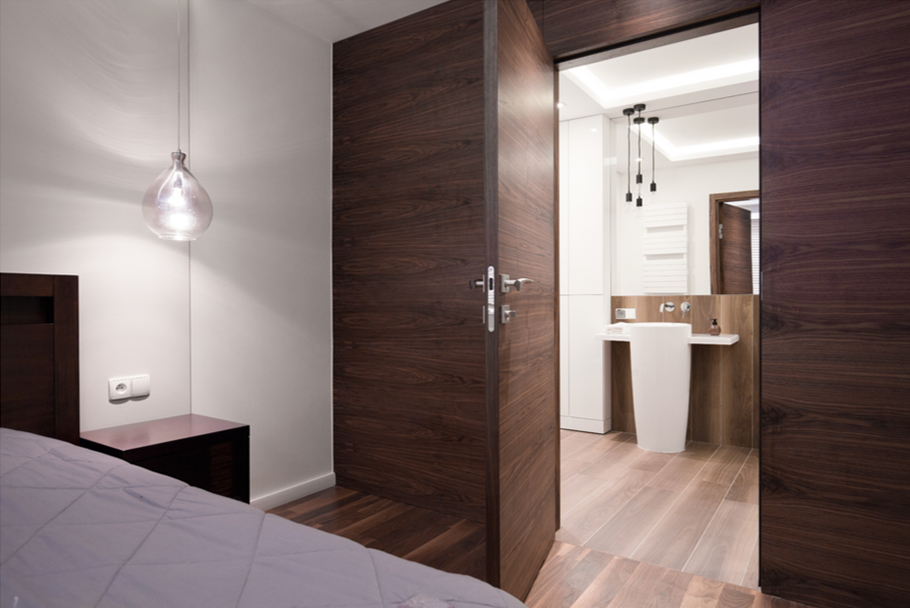
A bedroom door does more than just ensure privacy; it also sets the tone of the space. As design boundaries continue to blur, doors have evolved into refined elements that add warmth, balance and character to spaces. From the natural richness of teak veneer to the quiet elegance of contemporary finishes, the right wood veneer door can go a long way in shaping how a bedroom looks and feels. In this article, we’ll explore how texture, tone and design choices in veneer doors come together to elevate bedroom interiors with subtlety and intent.
Why Your Bedroom Door Deserves More Attention
When we think about bedroom design, doors do not always make the top of the list. The focus usually shifts to the bed, lighting, or the overall palette, and the door is treated as a secondary element. But step into any well-designed bedroom and it becomes clear that the door is never just a door. It is the first thing you notice as you approach the space and the element that frames your entry into it.
A bedroom door occupies a significant surface area, which makes it as much a design opportunity as a functional necessity. The material, finish and detailing of the door influence how the rest of the room is perceived. A well-considered bedroom veneer door, for instance, can bring warmth and continuity, helping the space feel more cohesive from the moment you enter. As interiors become more connected and design-led, the bedroom door naturally shifts from being a standard fitting to a more deliberate part of the overall composition.
Read Also: Designer Bedroom Door Designs: Elevate Your Space with Luxe Appeal
What Makes Wood Veneer the Right Choice for Bedroom Doors
The material you choose for a bedroom door shapes not just how it looks, but how well it performs over time. While solid wood has always been a traditional choice, it often comes with certain limitations such as higher cost, weight, and sensitivity to changes in humidity. Wood veneer offers a more balanced alternative, combining the character of real wood with greater dimensional stability and material efficiency.
What sets veneer doors apart is how they bring together the visual richness of natural wood with more practical advantages:
- Real Wood Surface: Veneer is a thin layer of natural wood, which gives the door the authentic grain, tone and texture of real wood.
- Natural Variation and Depth: Each veneer sheet carries unique grain patterns and subtle variations, adding visual depth and preventing the surface from feeling flat or uniform.
- Better Dimensional Stability: Compared to solid wood, veneer doors are less prone to issues such as warping or movement due to changes in temperature and humidity.
- Lightweight and Practical: Veneer doors are easier to handle, install and use on a daily basis, especially in spaces like bedrooms where ease of operation matters.
- Cost-Effective: Compared to solid wood, veneer offers a more efficient way to achieve a similar visual appeal without the associated material and fabrication costs. For instance, premium options such as teak veneer can deliver the same richness and character as solid teak in a more practical form.
- Flexibility in Finishes: With a wide range of options available from veneer manufacturers in India, doors can be adapted to suit different interior palettes and surface requirements.
Design Directions to Explore in Bedroom Veneer Doors
Choosing a veneer door is as much about design direction as it is about the material. At Mikasa Doors, our Designer Door Sets are built around the idea that a bedroom entrance should feel considered, not chosen by default. Whether you prefer a surface defined by quiet grain, one with tactile texture, or something developed entirely around your space, our collections address each of these directions with clarity.
Our Etched Collection: Texture that Works with the Wood
If you want your bedroom veneer door to carry more character than a plain surface allows, our Grooved Collection is where to begin. The collection brings together 7 distinct textures, Ribbed, Thread, Diagonal, Drift, Flutes, Linear and Matrix, each worked directly into the veneer surface across 37 wood finishes. The result is a surface where texture and grain come together naturally, adding depth without taking away from the authenticity of the wood.
Here’s how each texture can shape a bedroom setting:
- Ribbed and Linear: Clean, parallel lines create a structured and calm surface. In minimal bedrooms with straight-lined furniture, a Linear texture in American White Oak or Teak adds just enough surface interest without competing with the rest of the room.
- Flutes: A deeper, rounded surface profile that stands out more clearly. Flutes in American Walnut work well for a warmer, richer setting, while American White Ash creates a lighter, more open effect.
- Diagonal: Angled grain introduces movement across the surface without feeling excessive. This suits bedrooms with an existing material story, where the finish holds its own without needing additional emphasis.
- Drift: A softer surface with gentle variation, ideal for bedrooms that favour subtle depth over strong visual contrast.
- Thread and Matrix: More detailed and pattern-led, these textures suit bedrooms where the surface is meant to act as a focal element rather than blend into the background.
Read Also: Veneer Doors Care and Maintenance Basics
Our Bespoke Collection: Designed Around Your Bedroom
For bedrooms where the design intent is specific, our Bespoke Collection allows you to personalise every aspect of the door. Instead of selecting a fixed design, the surface finishes, veneer species, grain direction, groove pattern, size, and frame are all developed together, ensuring the final outcome feels aligned with the space.
This level of flexibility allows for more refined outcomes:
- For Warm, Layered Interiors: If your bedroom has warm, dark tones, think deep walnut wardrobes, earthy walls, or layered textiles, a bespoke door in American Black Walnut Quarter Cut with a matching veneer-wrapped frame can tie the entire room together without introducing a new material into the mix.
- For Lighter, Restrained Spaces: If the bedroom is lighter and more restrained, a bespoke door in American White Oak with a subtle vertical groove can add structure to an otherwise quiet room without disrupting its calm.
- For Continuity in Grain Direction: If the bedroom follows a specific grain direction, perhaps the wardrobe panels run horizontal, the bespoke door can be specified to continue that direction, so the room feels like a resolved composition rather than a collection of separate pieces.
- For a Complete, Coordinated Entrance: The frame matters as much as the door. In our Bespoke Collection, the frame is finished to match or complement the door leaf, veneer-wrapped, stained, or in a coordinated finish, so the entire entry reads as one complete element rather than a door placed against an unrelated surround.
A well-resolved bespoke veneer door does not need to announce itself. It simply allows the bedroom to feel more complete.
Read Also: Top Finish Options for Engineered Wood Doors
Choosing the Right Veneer Door for Your Bedroom
Once you’ve explored different design directions, the next step is understanding what works best for your space. The right choice often comes down to how the door responds to the room’s size, light and overall material palette.
When selecting a door, here are a few aspects to keep in mind:
- Working with Tone: Lighter tones such as oak or ash can help a smaller bedroom feel more open and relaxed, while darker tones like walnut or smoked finishes bring in depth and a more grounded feel. Warm tones create a cosy atmosphere, whereas neutral tones feel more understated and contemporary.
- Selecting the Right Grain Expression: Fine and uniform grains keep the look subtle and controlled, especially in minimal spaces. In contrast, bold and expressive grains add character and become more noticeable within the room.
- Choosing an Appropriate Finish: Matte finishes soften the overall appearance and reduce reflections, making the door feel quieter. Polished finishes reflect light and add definition, while textured finishes introduce a more tactile surface.
- Considering Proportion and Scale: In smaller bedrooms, simpler veneer doors with minimal detailing tend to feel more balanced. Larger rooms can accommodate more expressive grains or panelled surfaces without overwhelming the space.
- Coordinating with Surrounding Elements: The door should sit comfortably with wardrobes and wall panels. For instance, if wardrobes feature a warm wood tone, choosing a similar or slightly contrasting veneer helps maintain visual continuity.
- Responding to Natural Light: Rooms with ample daylight can support deeper tones such as walnut or dark teak, while spaces with limited light often benefit from lighter finishes that keep the room feeling open.
About Mikasa Doors
At Mikasa Doors, we believe a well-designed door is an integral part of how a space is experienced. Our solutions are developed as complete, factory-finished systems where the door, frame, and hardware come together with precision, ensuring consistency in both design and performance. Complementing this, Mikasa Doors brings the warmth, depth, and natural character of real wood into interiors. Our range includes Designer Door Sets, Dura Door Sets, Fire-Rated Door Sets, and Speciality Door Sets such as acoustic and other performance-driven solutions. Each category is developed as a complete door system, where design, finish, and engineering are resolved together to suit different spatial and functional requirements.
Recognised among leading veneer manufacturers in India, Mikasa is a trusted partner for designers and homeowners alike. To explore our offerings or discuss your requirements, call 1800 833 0004, write to info@mikasadoors.com, or reach out through our contact form.
Frequently Asked Questions
Veneer Doors Care and Maintenance Basics
Veneer doors carry a classic mix of the natural beauty of wood and the reliability of engineered woo
 Email:
  Toll Free No.: