


7 Things to Look for When Choosing Bedroom Doors
Key Takeaways
- Bedroom door selection should account for space, privacy needs, design preferences and daily functional requirements.
- Opening dimensions, furniture placement and door swing determine whether a chosen configuration will work comfortably.
- Door type should reflect the room’s needs, with acoustic options relevant where sound control is a priority.
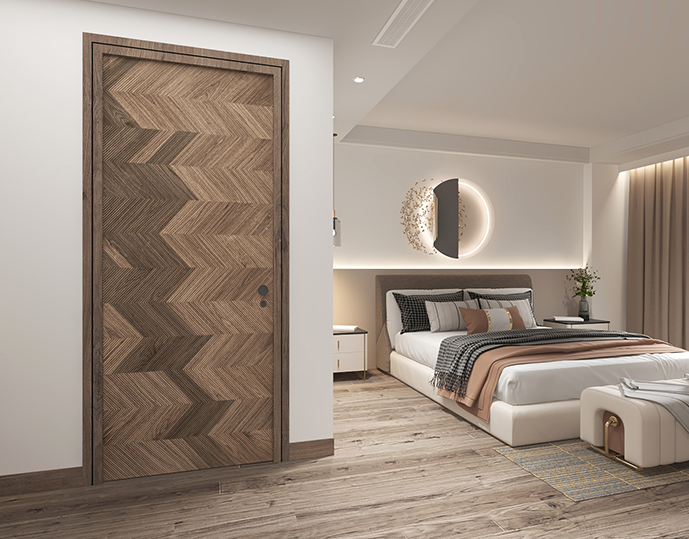
- The door’s design, surface detailing and finish should coordinate with adjoining furniture, flooring and wall treatments.
- Core construction and door leaf thickness influence a door’s strength, stability, weight and intended application.
- Veneer, laminate and painted finishes create distinct visual outcomes and should be selected around the wider interior palette.
- Doors, frames and hardware should be specified together to support compatibility, fit and consistent functioning.
- Mikasa Doors offers engineered doorset solutions with coordinated doors, frames, hardware and specialised performance options.
Choosing a bedroom door involves more than finding a design. The door should complement the space, offer the desired level of privacy, be easy to maintain and offer long-term performance. With so much to consider before making a choice, taking a pick can get confusing. That’s when having a clear checklist can help bring the key considerations into focus. This article covers seven such essential factors to consider when selecting a bedroom door.
1. Check the Available Space
Before choosing bedroom doors, look at how much space the room offers around the doorway and how the door will operate once installed. The opening size, furniture placement and circulation within the room all influence which configuration will work best.
Start by checking the opening dimensions and clearance around it. Make sure there is enough space for the door to open fully without interfering with:
- beds and wardrobes
- other furniture
- windows and switches
- movement through the room
For hinged doors, opening direction also matters. Check where the door should swing and which side the hinges should sit to avoid obstructing furniture or reducing usable space.
For wider openings or specific room layouts, consider the appropriate configuration:
- Single-leaf: Suitable for standard bedroom openings.
- Double-leaf: Useful for wider openings where two door leaves are required.
- Equal or unequal pairs: Select according to the opening and how the two leaves need to function.
Getting these details right at the planning stage helps ensure the selected bedroom doors suit the available space and operate without disrupting everyday movement.
2. Choose a Door Type That Fits the Requirement
Once the space and door configuration are clear, consider which type of door best suits the bedroom. Different requirements call for different door solutions, particularly when design or sound control forms part of the specification.
Mikasa Doors offers specialised door solutions for residential interiors, with different door ranges developed to address specific requirements.
- Non-fire rated doors: Designed for standard interior applications, these doors suit bedrooms where specialised performance is not required.
- Designer doors: Suitable when design is an important consideration, these doors offer a range of designs and surfacing options to complement different interior styles.
- Acoustic doors: For bedrooms where noise control is a priority, acoustic doors help reduce sound transmission. They are particularly relevant when a bedroom is located close to living rooms, laundry areas or other sources of noise.
The right door type should be selected according to the requirements of the room, rather than design preference alone.
Read Also: Modern Bedroom Door Designs 2026: Wooden Doors, Frames & Panel Ideas | Mikasa Doors
3. Match the Design to the Interior
A bedroom door should work with the proportions, detailing and finishes already present in the room. Consider how its design relates to flooring, wardrobes, furniture and wall treatments before selecting a style.
Mikasa Doors offers Designer Door Sets with three distinct collections: Bespoke, Grooved and Origami. Each takes a different approach to detailing and customisation, providing options for different bedroom wooden door designs.
Bespoke Collection
When the desired bedroom door does not fit within a standard design, the Bespoke Collection allows the door to be customized around a specific requirement. This gives greater flexibility in shaping the door’s detailing, proportions or overall look to suit the interior.
For example, a door can be customised to echo a particular detail used on a wardrobe or wall treatment, creating a more cohesive approach to bedroom door designs.
Grooved Collection
For bedroom door designs where surface texture plays an important role, the Grooved Collection features etched patterns across different wood options. The range includes both linear and geometric detailing, allowing the door surface to coordinate with different interior directions.
- Seven textures: Ribbed, Thread, Diagonal, Drift, Flutes, Linear and Matrix.
- 37 wood options: A wide choice of wood options allows the door to coordinate with different interior materials and finishes.
- Customised options: The design can be adapted to individual requirements, offering greater flexibility when developing the door for a specific bedroom interior.
Origami Collection
For a more distinctive bedroom door design, the Origami Collection brings the art of Japanese paper folding into door design. The collection translates the folds and geometric forms associated with origami into sculptural, three-dimensional surfaces, creating doors with greater depth and visual definition. The range includes four distinct designs, each interpreting folded forms in a different way:
- Flexa: Inspired by Kirigami, with carved detailing that creates a three-dimensional interpretation of folded forms.
- Origamo: Features a half-open orientation, concealed hinges and folded detailing that creates a floating appearance.
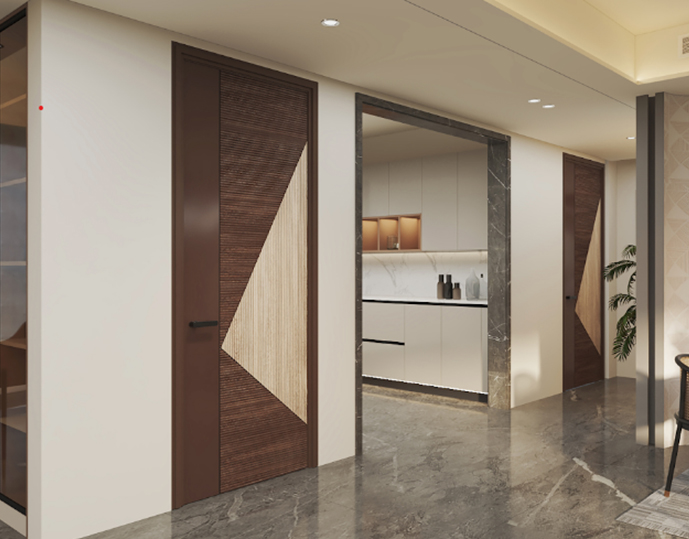
- Papyrus: Uses a diagonal fold to create a defined geometric surface, inspired by the minimalist Japanese craft of Kazarigiri.
- Tangram: Draws inspiration from the folds of traditional Japanese kimono forms, using overlapping elements to create a geometric pattern.
When selecting between these bedroom door designs, consider how the level of detailing relates to other elements in the room. For modern bedroom door designs, clean proportions and controlled detailing work well where the wider interior follows a restrained design direction.
4.Check the Door Construction
Door construction influences more than appearance. The internal core contributes to door leaf strength, stability and durability, making it an important specification to review when choosing bedroom doors.
Mikasa Doors offers engineered door construction with different core options to suit varying requirements:
- Solid particle core: Built with triple-layer density particle board using high-density wood chips, offering high strength, stability and good impact resistance.
- Tubular core: Built with LVL style and rail construction, providing structural strength with reduced weight.
Door leaf thickness is another specification to check alongside core construction. The appropriate thickness depends on the intended application and required performance.
Reviewing these construction details before finalising bedroom door designs helps confirm that the selected door meets the functional requirements of the space.
Read Also: Open Your Door to Style: Stunning Bedroom Door Ideas for Your Home
5. Select the Surface and Finish
Surface and finish determine how the selected door design appears in the bedroom. Mikasa Doors offers three main surfacing options, each creating a different visual result:
- Real wood veneers: Bring natural wood grain, texture and tonal variation to the door. Each veneer sheet has its own grain and shade, so slight variations are a natural part of the finish.
- Laminates: Offer a wider choice of colours, designs and textures, making them suitable for different interior directions.
- Paint: Provides a clean, uniform finish with colour options available in RAL and other recognised colour standards.
When choosing the finish, look at how its colour, grain and texture work with flooring, wardrobes and other surfaces in the bedroom. Comparing finishes alongside the selected door design helps identify an option that fits the overall interior.
6. Go For an All-in-One Doorset Solution
The door, frame and hardware should be selected as one complete system. This helps ensure that the components work together in terms of fit, function and overall appearance. Mikasa Doors offers engineered complete doorset solutions, bringing the door and matching frame together as part of one specification.
Two frame options are available:
- Engineered hardwood frames: Made from solid hardwood and suited to residential applications.
- Engineered LVL frames: Made from Laminated Veneer Lumber (LVL), offering high strength and suited to residential and fire-rated applications.
Consider the Hardware
Hardware is another part of the doorset specification, influencing how the door opens, closes and secures. Mikasa Doors offers architectural ironmongery to suit the requirements of the complete door set, including:
- Handles
- Hinges
- Locks and latches
- Flush bolts
- Door closers
- Door seals
- Door stoppers
For bedroom doors, selecting these elements together helps create a coordinated doorset with compatible components.
7. Check Fit, Installation, Quality and Warranty
Before finalising bedroom doors, review the complete specification beyond design and appearance. Confirm that the selected door, frame and hardware are compatible with the opening and that the site is ready for installation. The final checks cover dimensions, installation readiness, quality, certifications and warranty.
A few final checks can help:
- Final dimensions: Recheck the door opening and selected door and frame dimensions before ordering.
- Installation readiness: Confirm that the site meets the installation requirements and that wet trades are complete where applicable.
- Factory preparation: Mikasa Doors uses CNC machining to prepare recesses for components such as hinges, locks and door closers, helping reduce site preparation.
- Quality standards: Check the applicable manufacturing standards and certifications for the selected product.
- Responsible sourcing: Look for FSC-certified products where applicable.
- Product-specific certification: Verify certifications such as BM TRADA or Q-Mark where relevant to the selected product and application.
- Warranty: Review the warranty period, coverage and applicable terms before placing the order.
Mikasa Doors’ manufacturing facilities are certified to ISO 9001, ISO 14001 and ISO 45001. Applicable product ranges are supported by recognised certifications, including BM TRADA and Q-Mark, where relevant to the selected product and application. Review the documentation for the specific doorset to confirm applicable quality standards, certifications, performance specifications and warranty coverage before finalising the purchase.
Read Also: Exploring Mikasa’s Grooved Collection: Interplay of Textures for Modern Bedroom Doors
About Mikasa Doors
At Mikasa Doors, we offer complete door systems designed to bring together precision, performance and refined aesthetics. Our solutions go beyond standalone shutters, combining the door, frame and compatible hardware into engineered systems that ensure consistent quality and reliable installation. Each door is factory-finished under controlled manufacturing processes, delivering uniform surface quality, durability and long-term performance. Our portfolio spans residential and commercial applications, including performance-driven solutions such as fire-rated and specialised doors designed to meet functional and safety requirements.
Our range includes a variety of finishes and configurations suited to different front doors for homes, ranging from clean, minimal surfaces to more structured and expressive designs. With a focus on both design and long-term performance, Mikasa Doors supports entrances that are not only visually well-resolved but also built to perform reliably in everyday use. To explore suitable options for your space or discuss your requirements, please call us at: 1800 833 0004, email at: info@mikasadoors.com, or fill out our contact form.
Custom or Catalogue Bedroom Door Design? How to Make the Right Choice
A door is more than a divider between spaces; it is an integral part of your home’s interiors. The

4 Strategies to Elevate Your Bedroom Door’s Aesthetics
Bedroom doors are more than just functional elements that ensure privacy and security; they also pla
Open Your Door to Style: Stunning Bedroom Door Ideas for Your Home
Bedroom doors are more than just functional barriers—they’re design elements that set th
 Email:
 Toll Free No.: